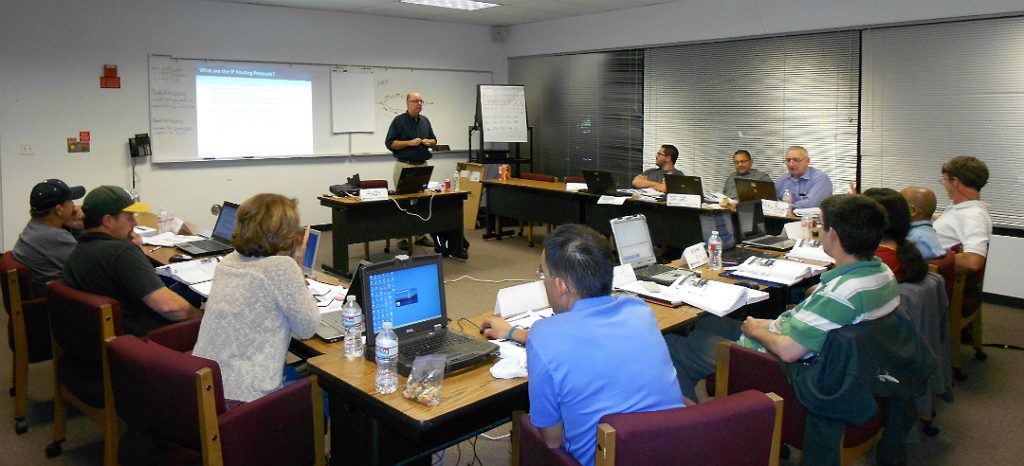
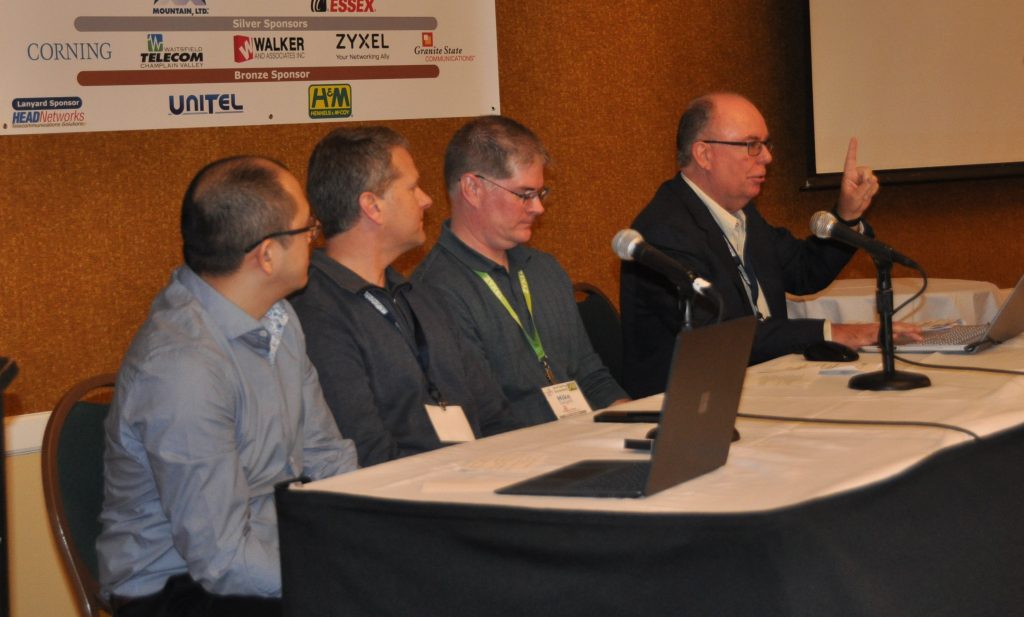
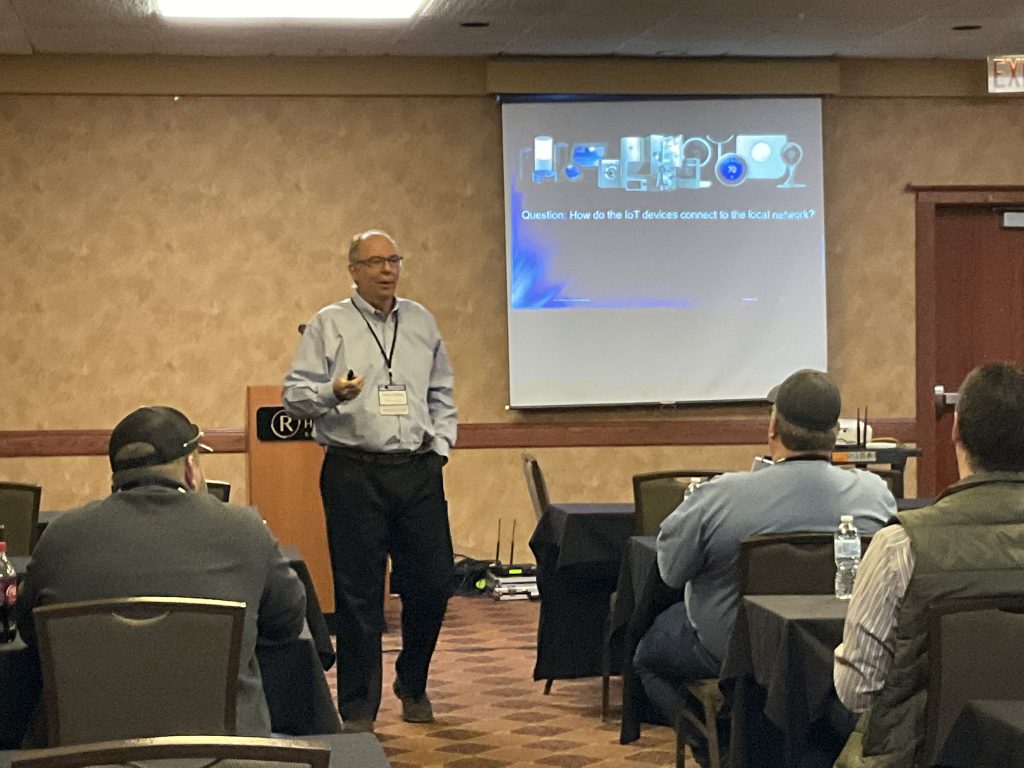
 Welcome to our main web site. If you are a new visitor here, there are a number of things to view: our FAQ’s, Networking and Computing Tips, our CellStream Blog, and other fun reading can all be found in the drop down menus above. The Training menu provides access to our courses, our course calendar, and learning services. The Consulting Menu provides information on our consulting services and a place to meet our consulting and teaching team.
Thanks for visiting us here and if you want to dive deeper, interact with us and other network scientists – visit our Patreon community here!

Why Broadband Service Provider Technical Teams Should Be Using Linux in 2026
Views: 2,204 Originally published August 7, 2018 | Updated October 2026 Several years ago, during a video call with a service provider technical lead, I noticed something interesting. Almost every question I answered, whether it concerned Wi-Fi, network testing, troubleshooting, or packet analysis, involved demonstrating something on my Linux laptop. Eventually, the technical lead asked

How to Identify Your Computer’s Hardware Components
Views: 2,642 Have you ever wondered exactly what hardware is inside your computer? Not just how much memory you have or what processor Windows says you’re running, but the actual manufacturer and model of your motherboard, the type and speed of your RAM, the BIOS or UEFI firmware version, and the details of your graphics
Keeping your Windows PC Software Up to Date in 2026
Views: 2,161 One of the challenges of owning and maintaining a Windows PC has always been keeping the operating system, installed applications, device drivers, and other software up to date. I originally wrote this article back in September 2013 and made a few updates in 2020. A lot has changed since then! Fortunately, keeping software
IPv6 Lab Exercises Appearing
Views: 220 We promised to deliver some great IPv6 labs to expand your IPv6 skills and the first two are up! Three more are scheduled already! To check them out go here. These labs include full instructions, GNS3 Portable Projects (not required) and PCAPs for Wireshark where needed. Thank you to our Patreon members who

The Linux ip Command: A Practical Guide to Network Troubleshooting
Views: 7,400 Originally published October 26, 2018 | Updated October 2026 If you have spent much time working with Linux, you probably remember commands such as ifconfig, route, and arp. For years, these utilities were commonly used to examine network interfaces, IP addressing, routing tables, and other networking information. Those commands may still be available
Public DNS Servers Explained: Which One Should You Use?
Views: 616 Most people never think about the Domain Name System (DNS) until something stops working. They enter a website address, press Enter, and expect the page to appear. Somewhere along the way, DNS helps translate the domain name into the IP address needed to reach the destination. What many Internet users do not realize
Wireshark Display Filter Cheat Sheet
Views: 261 This updated Wireshark Display Filter Cheat Sheet (multi page) is designed as a practical reference for anyone who uses Wireshark for troubleshooting, packet analysis, protocol study, or security work. The original version already covered the basic filter structure, comparison operators, conversation filters, common protocol fields, TCP analysis, Wi-Fi, routing, VoIP, DNS, DHCP, TLS,
A Great Linux Cheat Sheet
Views: 198 Are you just getting started with Linux? Are you an occasional user? This is a great cheat sheet to help you with Linux in general. You know I highly recommend that technicians learn Linux. This updated Linux Command Cheat Sheet is designed as a practical reference for anyone working with Linux at the
What Can Wireshark Really Tell You About an Encrypted Signal Conversation?
Views: 900 Signal has a well-earned reputation as a secure messaging application. Messages, voice calls, video calls, files, and other Signal-to-Signal communications are protected using end-to-end encryption. Signal states that message and call contents cannot be accessed by Signal or other third parties because the communications are always end-to-end encrypted. So that raises an interesting
Why Your Wireshark Filter May Not Mean What You Think It Means
Views: 545 Wireshark display filters can look deceptively simple. For example: tcp.port > 1024 seems obvious. But a TCP packet normally has two port values: a source port and a destination port. That means Wireshark may be evaluating more than one value when you write a filter. Consider: This packet satisfies: tcp.port > 1024 because
 Join our community on Patreon
Join the CellStream Network Science Membership today for access to real-world networking knowledge, hands-on labs, downloadable PCAPs, Wireshark analysis exercises, troubleshooting workflows, and professional technical insights built from decades of operational experience. Whether you work in broadband, Wi-Fi, VoIP, enterprise networking, or packet analysis, this community is designed to help you strengthen your skills, solve problems faster, and continue advancing your technical expertise.
Did you learn something?
Did I save you time?
Please support my work
 Buy me a coffee!