
- Version
- Download 1708
- File Size 35.37 KB
- File Count 1
- Create Date February 20, 2016
- Last Updated October 13, 2026
MGCP Cheat Sheet
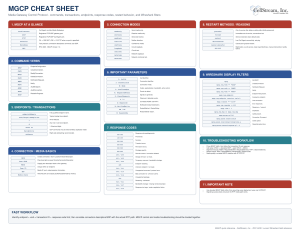 This updated MGCP Cheat Sheet is designed as a practical reference for anyone working with Media Gateway Control Protocol in VoIP environments. The original version focused heavily on the core MGCP command verbs and response codes, including commands such as
CRCX, MDCX, DLCX, RQNT, NTFY, AUEP, AUCX, and RSIP, along with the major 1xx, 2xx, 4xx, 5xx, and package-specific response classes. MGCP Cheat Sheet Sheet The updated version keeps that foundation but adds the context needed to understand what those commands are doing during real call control and troubleshooting.
The sheet is useful because MGCP can be deceptively simple on the surface. A Call Agent issues commands, a Media Gateway responds, and media connections are created or modified—but troubleshooting requires you to keep track of endpoints, transaction IDs, connection IDs, response codes, restart state, event requests, and media parameters at the same time. The cheat sheet brings those pieces together so you can quickly identify the command being sent, understand the response class, and determine whether the problem is related to call control, endpoint state, resources, codec negotiation, or the media path.
How to use the cheat sheet: start by identifying the MGCP endpoint and the command verb involved. Then follow the transaction ID so that each command can be matched with its response. During call setup, pay particular attention to the CRCX and MDCX sequence and the associated connection descriptors or SDP information. For digit collection or signaling problems, follow RQNT and NTFY along with the RequestedEvents, SignalRequests, RequestIdentifier, and observed events. For gateway or endpoint availability issues, examine RSIP, the RestartMethod, RestartDelay, and reason code.
The response-code sections are intended to help you determine the type of failure before you dig into the details. A 4xx response generally indicates a transient condition, while a 5xx response points to a more persistent protocol, capability, configuration, or resource problem. The original sheet already included many useful examples such as endpoint-not-ready conditions, unsupported commands, unknown call IDs, bandwidth problems, codec negotiation failures, and restart conditions. MGCP Cheat Sheet Sheet The updated version highlights the codes that are most useful during troubleshooting rather than treating every response code as equally important.
The cheat sheet also includes practical Wireshark display filters so you can move directly from MGCP theory to packet analysis. Use them to isolate CRCX, RQNT, or NTFY commands, follow a transaction ID, locate error responses, identify duplicate requests or responses, and correlate Call IDs and Connection IDs. For VoIP troubleshooting, remember that successful MGCP signaling does not automatically mean the media path is working correctly—use the MGCP connection information together with SDP, RTP, and RTCP analysis to understand the complete call.
Did you find this useful? Would you change or modify this file in any way? If you would like to help support the continued development of independent networking, broadband, Wi-Fi, VoIP, and packet analysis content, please consider joining our Patreon community where you will gain access to exclusive technical resources, downloadable labs and PCAPs, bonus course content, troubleshooting guides, and additional member-only material. You can also leave comments at our Discord server. You can also support our work by simply buying us a coffee — every contribution helps us continue creating practical, real-world network science education for professionals and enthusiasts alike.