
- Version
- Download 5272
- File Size 570.74 KB
- File Count 1
- Create Date October 2, 2013
- Last Updated October 12, 2026
IPv6 Cheat Sheet
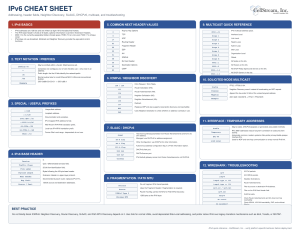 This updated IPv6 Cheat Sheet is designed as a practical, first-level reference for students, technicians, network engineers, and anyone working with IPv6. It brings together the core information you are most likely to need during study, configuration, troubleshooting, or packet analysis, including IPv6 address types, text notation, special-use prefixes, base-header fields, common Next Header values, ICMPv6, Neighbor Discovery, SLAAC, DHCPv6, multicast, temporary addressing, and useful Wireshark filters.
IPv6 has a lot of moving parts that are easy to remember individually but difficult to keep straight when troubleshooting. This sheet gives you one place to quickly confirm things such as the difference between Global Unicast, Link-Local, and Unique Local addresses; what Router Solicitation and Router Advertisement messages do; which ICMPv6 types are used for Neighbor Discovery; which UDP ports DHCPv6 uses; how solicited-node multicast works; and why a normal IPv6 LAN is typically built around a /64.
A major goal of the updated sheet is to focus on modern IPv6 operation rather than older transition technologies. Legacy mechanisms such as 6to4, Teredo, and ISATAP were intentionally left out of the quick reference so that the sheet stays centered on native IPv6, current addressing practices, and the protocols most likely to appear in today’s networks. It also calls out deprecated Site-Local addressing and includes current special-purpose prefixes such as the documentation prefix and NAT64 translation prefixes.
The troubleshooting sections are especially useful in real-world work. If a host has no IPv6 default route, start by looking for Router Advertisements. If Neighbor Discovery is failing, examine Neighbor Solicitation and Neighbor Advertisement traffic. If Path MTU problems appear, remember that IPv6 routers do not fragment transit traffic and that ICMPv6 Packet Too Big messages are essential. The included Wireshark filters are there to help you isolate these behaviors quickly.
This cheat sheet is intended to complement the separate IPv6 Subnetting Cheat Sheet. Use this one when you need to understand how IPv6 addressing and control protocols operate, and use the subnetting sheet when you need to work through prefix lengths, /64 counts, nibble boundaries, and allocation math. Together, they make a useful desk reference for classroom instruction, certification study, lab work, and day-to-day IPv6 troubleshooting.
Did you find this useful? Would you change or modify this file in any way? If you would like to help support the continued development of independent networking, broadband, Wi-Fi, VoIP, and packet analysis content, please consider joining our Patreon community where you will gain access to exclusive technical resources, downloadable labs and PCAPs, bonus course content, troubleshooting guides, and additional member-only material. You can also leave comments at our Discord server. You can also support our work by simply buying us a coffee — every contribution helps us continue creating practical, real-world network science education for professionals and enthusiasts alike.